

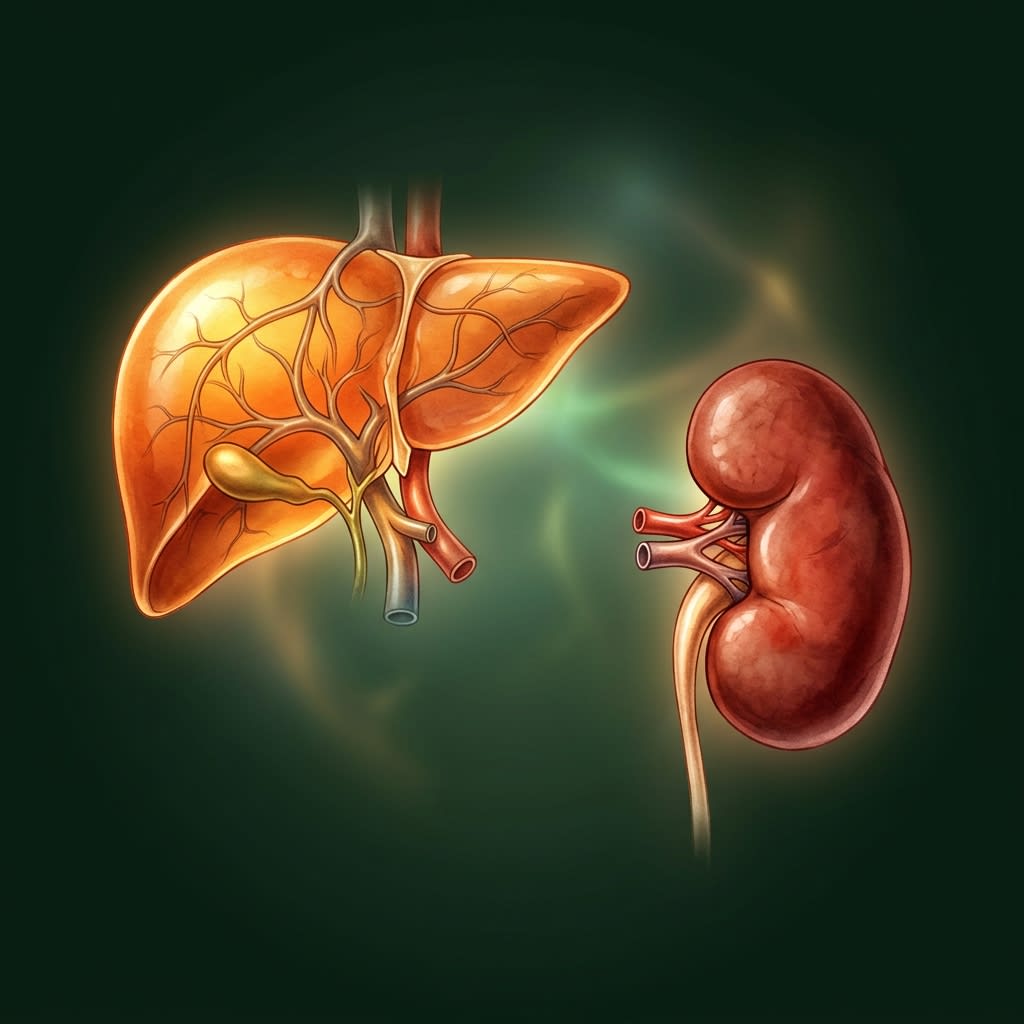
Clinical bottom line: Most acidity, gastritis and indigestion are not pancreatic cancer. But symptoms that are new, persistent, progressively worsening, or accompanied by unexplained weight loss, jaundice, pain radiating to the back or new-onset diabetes deserve medical assessment. Blood tests can identify clues; they cannot exclude or independently diagnose pancreatic cancer.
A burning sensation after a heavy meal often makes people think of acidity. The more useful question is not simply where is the pain? but what has changed, what other symptoms are occurring, and whether there is an explanation for them. Pancreatic cancer may cause no early symptoms, and when symptoms occur they can overlap with common digestive illnesses. A symptom checklist cannot reliably distinguish them at home.
This original QXL Diagnostics guide explains how clinicians approach that uncertainty, including tests to order and tests not to misuse. It is written for the Indian patient pathway and includes guidance from NCI, NICE and Indian pancreatic cancer consensus recommendations.
Acidity, gastritis or pancreatic cancer: what differs?#
| Feature | More typical of reflux / common dyspepsia | May raise concern for pancreatic or other serious disease |
|---|---|---|
| Character | Burning behind breastbone or upper stomach, sour taste or regurgitation | Persistent deep upper-abdominal ache, sometimes extending to mid-back; may be vague |
| Timing | May relate to meals, lying down or known triggers | Can become more persistent; may worsen after meals or at night, but there is significant overlap |
| Response to antacids | May improve | Often does not resolve; response alone cannot rule cancer in or out |
| Appetite and weight | Usually stable | Unintentional weight loss, loss of appetite or early fullness may develop |
| Stool/urine colour | Usually unchanged | Light stools, dark urine, jaundice or generalized itching may suggest bile-duct obstruction |
| Metabolism | No specific relationship | New diabetes or unexpectedly deteriorating glucose control, especially with weight loss, may add concern |
Important: gallstones, hepatitis, peptic ulcers, pancreatitis, gallbladder inflammation and stomach conditions can also cause these findings. Do not diagnose yourself from the table. NCI on symptoms.
15 possible signs and symptoms to understand#
- Upper-abdominal or epigastric pain: a deep ache or persistent discomfort; may be confused with indigestion.
- Pain spreading to the middle or upper back: sometimes appears with relatively mild abdominal discomfort.
- Unexplained weight loss: particularly concerning when combined with new digestive symptoms.
- Reduced appetite: food intake becomes unexpectedly low.
- Early satiety: feeling full unusually quickly or recurrent nausea after eating.
- Jaundice: yellow colour in the eyes or skin; urgent assessment is needed even without pain.
- Dark urine: especially together with pale stool or yellow eyes.
- Pale or clay-coloured stool: possible reduction in bile reaching the intestine.
- Generalised itching: may accompany cholestasis and jaundice.
- Oily, greasy, floating or difficult-to-flush stools: possible fat maldigestion or pancreatic exocrine insufficiency.
- Nausea or vomiting: non-specific; persistent vomiting or inability to hydrate needs timely evaluation.
- New-onset diabetes: especially in an older adult with unexplained weight loss, rather than typical metabolic weight gain.
- Unexpected deterioration in established diabetes: a change in glycaemic control without an obvious cause.
- Marked fatigue or weakness: common to many conditions and not specific for cancer.
- Unprovoked blood clots: a new painful swollen leg or pulmonary embolism can occasionally be associated with malignancy; acute breathing difficulty or chest pain requires emergency care.
Some people report bloating, altered bowel habits or low mood. None is specific. Tumours in the pancreatic head are more likely to obstruct the bile duct and cause jaundice; tumours in the body or tail may present later with pain or weight loss and no jaundice.
When should you seek care: emergency, urgent or routine?#
Go to an emergency department now for yellow eyes with fever, chills and significant abdominal pain (possible cholangitis), severe sudden abdominal pain, fainting, inability to retain fluids with dehydration, gastrointestinal bleeding, or chest pain / sudden breathlessness / collapse (possible clot or cardiac event). Call emergency services for life-threatening symptoms. Do not await a blood test package or home collection.
Arrange urgent same-day or prompt specialist assessment for new unexplained jaundice, progressive abdominal or back pain with unexplained weight loss, or a concerning combination of persistent digestive symptoms and newly diagnosed diabetes. A physician may recommend urgent imaging rather than waiting for trial after trial of antacids. The UK NICE NG12 guideline highlights age 40+ with jaundice and age 60+ with weight loss plus back pain, abdominal pain, nausea, vomiting, diarrhoea, constipation or new-onset diabetes; these are UK referral thresholds, not Indian screening rules.
Book a standard clinical consultation for recurring uncomplicated reflux or dyspepsia, especially when symptoms do not settle, the pattern changes, or medicines are needed repeatedly. The clinician may assess H. pylori, medication effects, peptic ulcer disease and whether endoscopy is appropriate.
Why pancreatic cancer can look like gastritis#
The pancreas lies behind the stomach and has endocrine functions (insulin and glucagon) and exocrine functions (digestive enzymes). A developing tumour may affect nearby nerves, bile ducts, pancreatic ducts, gastric emptying or nutritional status. The resulting pain, nausea, bloating, loss of appetite and altered stool can resemble less serious digestive disorders. Early tumours can cause no noticeable symptoms.
Clinical risk factors that matter — but are not a diagnosis#
Risk generally rises with age. Tobacco use, long-standing chronic pancreatitis, obesity, diabetes and a strong family history or specific inherited cancer-predisposition syndromes can increase risk. Most people with reflux, gastritis or diabetes do not have pancreatic cancer. Higher-risk family histories warrant genetic counselling and specialist surveillance assessment, not an indiscriminate annual CA 19-9 screen.
What happens at the first doctor visit?#
A doctor examines the pattern and duration of pain; quantifies weight change; asks about dark urine, pale or greasy stools, itch, fever, medicine use, alcohol, smoking, diabetes and family history; and examines for jaundice, abdominal tenderness and possible masses. The working diagnosis may be reflux, ulcer disease, gallbladder disease, pancreatitis, hepatobiliary obstruction, malignancy or another disorder. Selection of laboratory tests and imaging is determined by those findings.
Blood tests: what can QXL assess and what does each result mean?#
| Test | Useful clinical question | What it cannot establish |
|---|---|---|
| Bilirubin total/direct, ALP, GGT, AST, ALT | Is there evidence of cholestasis or hepatocellular injury? | Cannot show the site or cause of obstruction; gallstones and benign conditions can look similar |
| CBC | Is anaemia, infection or another systemic abnormality present? | A normal CBC does not rule out pancreatic cancer |
| Fasting plasma glucose / HbA1c | Is there new or worsening hyperglycaemia? | Cannot distinguish common type 2 diabetes from cancer-associated diabetes |
| Creatinine / eGFR | Helps assess kidney function before indicated contrast imaging | Does not test for pancreatic cancer |
| Serum lipase / amylase | Useful if acute pancreatitis is clinically suspected | Not a reliable pancreatic cancer screening test; normal levels do not exclude cancer |
| CA 19-9 | Specialist-selected baseline or serial monitoring in known / strongly suspected disease | Not diagnostic, not suitable for population screening, and not a rule-out test |
| CEA | Occasionally an adjunct in an oncologist-selected context | Not a general screening or confirmation test |
| Faecal elastase-1 | Investigates suspected pancreatic exocrine insufficiency, e.g., greasy stools | Does not diagnose pancreatic cancer; watery stool may yield falsely low results |
| H. pylori stool antigen | Evaluates selected uncomplicated dyspepsia/ulcer presentations | Not a pancreatic test; antibiotics, bismuth and acid-suppressing therapy may affect accuracy |
QXL's existing gastroenterology service lists liver chemistry, stool elastase, pancreatic enzymes, HbA1c and CA 19-9 when indicated. QXL's oncology service also lists CA 19-9. QXL Diagnostics lists the relevant laboratory investigations. Indicative TAT: Same Day, subject to individual assay and sample cut-off confirmation. For specimen requirements, price and any unconfirmed test details, Contact QXL Diagnostics Super Speciality Lab Bengaluru. The proposed packages are not yet enabled for online purchase.
CA 19-9 explained: the most important misconception#
CA 19-9 is a circulating carbohydrate antigen used primarily as an adjunct in specialist management of pancreatic and certain other gastrointestinal cancers. It can rise in pancreatic cancer but can also rise in biliary obstruction, cholangitis, pancreatitis and other benign or malignant disorders. Some people with the Lewis antigen-negative phenotype produce little or no CA 19-9, even with cancer. A normal result can therefore be falsely reassuring, and a raised result is not proof of cancer. When an oncologist requests serial monitoring, use the same laboratory/method where practicable and interpret trends alongside bilirubin, imaging and treatment status. Do not treat a numerical cut-off as a diagnosis.
QXL should not position CA 19-9 as a standalone “early cancer detection”, “pancreatic cancer screen” or routine wellness add-on. MedlinePlus explains that it cannot be used alone to diagnose or screen for cancer.
Which scan is used if pancreatic disease is suspected?#
The clinician may use abdominal ultrasound to evaluate jaundice or look for gallstones and biliary dilatation. However, ultrasound can fail to show a small pancreatic tumour, and a normal scan does not exclude pancreatic disease when suspicion remains.
For suspected pancreatic malignancy, an appropriately performed multiphasic contrast-enhanced pancreas-protocol CT is a major initial diagnostic/staging study. MRI/MRCP can clarify ducts or indeterminate findings and is useful in certain settings. Endoscopic ultrasound (EUS) may identify small lesions and permit a fine-needle biopsy. The need for tissue confirmation depends on the multidisciplinary plan; histology is usually required before systemic therapy but may not be required before immediate surgery for selected clearly resectable cases. ERCP is often used therapeutically for biliary drainage, not as a first-choice general screening investigation. PET-CT is not the routine first imaging test for a suspected pancreatic primary.
Blood tests do not replace pancreas-protocol imaging or tissue evaluation. QXL is a laboratory partner; scans and procedures require the appropriate radiology/endoscopy/oncology services.
The appropriate diagnostic pathway: six clinical decisions#
- Identify emergencies and alarm features. Do not send possible cholangitis, severe acute illness or suspected pulmonary embolism through routine booking.
- Take a structured history and conduct an examination. Distinguish uncomplicated dyspepsia from jaundice, progressive symptoms, weight loss and diabetes clues.
- Order selective laboratory investigations. For example, a liver panel for jaundice, glucose/HbA1c for a diabetes presentation, CBC/renal tests when clinically relevant. Do not automatically order all tumour markers.
- Arrange imaging when the clinical probability justifies it. Ultrasound may find biliary obstruction; pancreas-protocol CT and/or MRI/EUS may be needed when suspicion persists.
- Refer to a gastroenterologist, hepatobiliary surgeon or specialist pancreatic multidisciplinary team. Biopsy, staging and treatment planning are specialist decisions.
- Use laboratory markers for appropriate ongoing care. CA 19-9, liver chemistry, glycaemic assessment and nutritional testing may support monitoring after diagnosis, interpreted with imaging.
Two illustrative situations (not diagnostic rules)#
Situation A: A young adult experiences periodic heartburn after late meals, with no weight loss, jaundice or progressive pain. A clinician may follow a standard reflux/dyspepsia approach, which may include H. pylori evaluation or treatment according to context—not an automatic pancreatic tumour-marker panel.
Situation B: A 64-year-old has new upper-abdominal discomfort, an unintentional 5 kg weight loss and newly detected hyperglycaemia. Even if the symptoms feel like acidity, timely clinical evaluation and consideration of pancreatic imaging are important. A normal CA 19-9 would not exclude pancreatic disease.
Suggested QXL laboratory pathways — clinician directed, not cancer screening#
1. Upper-abdominal symptoms and hepatobiliary assessment: selected CBC, total/direct bilirubin, AST, ALT, ALP, GGT and glucose; other tests based on history. If jaundice is present, prioritize urgent doctor review and imaging.
2. New diabetes with unexplained weight loss: selected glucose, HbA1c, CBC, renal and liver biochemistry; referral for imaging based on the total clinical picture. No routine CA 19-9.
3. Suspected pancreatic exocrine insufficiency: faecal elastase-1 with clinician-selected nutritional parameters as appropriate. This investigates maldigestion, not cancer.
4. Oncology-directed pancreatic marker monitoring: CA 19-9 only on specialist request, usually interpreted alongside bilirubin/liver biochemistry and imaging; the clinical team determines the monitoring interval.
These are clinician-directed assessment pathways, not pancreatic-cancer screening packages. The laboratory-testing content is medically reviewed; package pricing, sample-specific TAT, LIMS mapping and online-booking activation remain subject to QXL operational confirmation.
Can pancreatic cancer be screened before symptoms?#
There is no recommended routine pancreatic cancer screening with CA 19-9, amylase, lipase or whole-body check-up panels for average-risk asymptomatic adults. People with particular high-risk inherited variants or strong familial clustering may qualify for specialist surveillance using MRI/MRCP and EUS after genetic counselling and risk assessment. This is different from screening the general public.
How QXL Diagnostics can help in Bengaluru#
QXL Diagnostics provides clinically selected laboratory investigations such as liver chemistry, glucose/HbA1c, pancreatic enzymes where appropriate, selected tumour markers and malabsorption studies. The lab can support prompt sample collection and clear laboratory reporting; QXL does not claim blood tests can diagnose pancreatic cancer, and patients with red flags should be directed to clinicians and imaging services first.
Learn about gastroenterology tests, oncology markers or contact QXL at +91 99646 39639 to confirm test suitability and availability. Do not use a routine lab appointment as a substitute for urgent medical care.
Medical note#
Medically reviewed and authorised by Dr. Shantakumar Muruda, MD (Medical Biochemistry), Senior Consultant and Founder & CEO, QXL Diagnostics on 20 November 2026. This article is educational, not a personalised diagnosis or substitute for specialist assessment.
Additional topic-specific evidence#
- NICE NG12
- MedlinePlus CA 19-9
- AGA high-risk surveillance
- AGA exocrine insufficiency
- ACG dyspepsia
- ESMO clinical practice
- NCI screening
- QXL gastroenterology
- QXL oncology
QXL Diagnostics: test availability, TAT and enquiries#
- Test availability: Test available at QXL Diagnostics. Confirm the individual requested test when enquiring.
- Turnaround time (TAT): Same Day (indicative; individual tests and sample cut-offs must be confirmed).
- Test details and unconfirmed information: Contact QXL Diagnostics Super Speciality Lab Bengaluru.
- WhatsApp for Details: Message QXL Diagnostics.
- Phone: +91 99646 39639.
Please note: Same Day is an indicative laboratory turnaround, subject to sample receipt/cut-off, individual assay workflow, and confirmation by QXL. Some specialised and stool tests may take longer. Urgent symptoms require clinical care, not waiting for a result. This service is for clinician-directed laboratory assessment. No laboratory package screens for, diagnoses, or rules out pancreatic cancer.
Medical sources and evidence#
Questions patients frequently ask#
Can acidity be an early sign of pancreatic cancer?#
Indigestion can occur in people with pancreatic cancer, but acidity is very common and usually has other causes. Persistent or changing symptoms with weight loss, jaundice or back pain need assessment.
Can pancreatic cancer cause back pain without jaundice?#
Yes. Some patients have upper-abdominal or back pain without jaundice; this is especially possible when the bile duct is not obstructed.
Does a normal CA 19-9 rule out pancreatic cancer?#
No. CA 19-9 is neither a screening nor a rule-out test. Some patients with pancreatic cancer have normal CA 19-9.
Can amylase and lipase identify pancreatic cancer?#
No. They are used mainly when pancreatitis is suspected and cannot diagnose or exclude pancreatic malignancy.
Which scan is best when cancer is suspected?#
A contrast-enhanced pancreas-protocol multiphasic CT is a central imaging test; MRI/MRCP or EUS may be added based on clinical findings.
Should all people with diabetes have CA 19-9 testing?#
No. Diabetes is common. The combination of new diabetes with unexplained weight loss or other red flags warrants clinical risk assessment, not automatic CA 19-9 screening.
Is pancreatic cancer curable?#
Some early, operable cases may be treated with curative intent using surgery and systemic treatment. Outcomes depend on stage, tumour biology and specialist assessment.
Can blood tests find bile duct obstruction?#
Liver biochemistry can suggest cholestasis but imaging is required to identify the cause and location.
Where can I get a CA 19-9 test in Bengaluru?#
QXL Diagnostics lists CA 19-9 in its oncology and gastroenterology services. It should be ordered and interpreted with appropriate specialist advice.
When is jaundice an emergency?#
Yellow eyes with fever, chills, abdominal pain, confusion or severe illness needs emergency care because bile-duct infection can become life threatening.
Medical & Laboratory Disclaimer
Medical information notice: This article is for general educational purposes and does not diagnose disease or replace consultation with a qualified healthcare professional. Test selection, preparation and interpretation should be based on individual clinical circumstances.
Dr. Shantakumar Muruda
MD (Medical Biochemistry), Senior Consultant, Founder & CEO, QXL Diagnostics
QXL Clinical Editorial Commitment: Every health guide, biomarker explanation, and screening schedule published on this portal undergoes rigorous clinical review by qualified MD pathologists and biochemists to ensure adherence to peer-reviewed evidence (ACOG, WHO, ICMR) and laboratory diagnostic accuracy.